
Is it just me, or does everything feel expensive in 2026?
Cruise fares have gone up. Flights have gone up. Hotels have gone up. Even a basic coffee run can feel like a financial decision at this point.
While cruising can still be a great vacation value, especially when you compare it to planning hotels, meals, entertainment, and transportation separately, the total cost of a cruise vacation is not always just the fare you see when you book.
There are also the extras of cruising. This post has been updated in May 2026 with fresh cruise budgeting tips, updated onboard extras, and more ways to plan for hidden cruise costs before you sail.
This post may contain affiliate links. As an affiliate, I may earn a small commission if you click, purchase, or apply for an offer. This is at no extra cost to you. As an Amazon Associate, I earn from qualifying purchases.
Some are expected, like gratuities and transportation to the port. Others can sneak up on you, like WiFi, specialty coffee, cocktails, shore excursions, photos, room service fees, or that “quick” walk through the gift shop that somehow turns into a souvenir haul.
The good news? Most cruise expenses are easier to manage when you know about them ahead of time.
In this post, I’m sharing the extra costs of cruising you’ll want to budget for before you sail, plus a few tips from our own family cruises to help you avoid those surprise,“Wait…how much is our onboard account?” moments.
And at the end, you can grab my free cruise budget planning worksheet to help you plan your own cruise vacation with a little less stress.
Quick Answer: What extra costs should you budget for on a cruise?
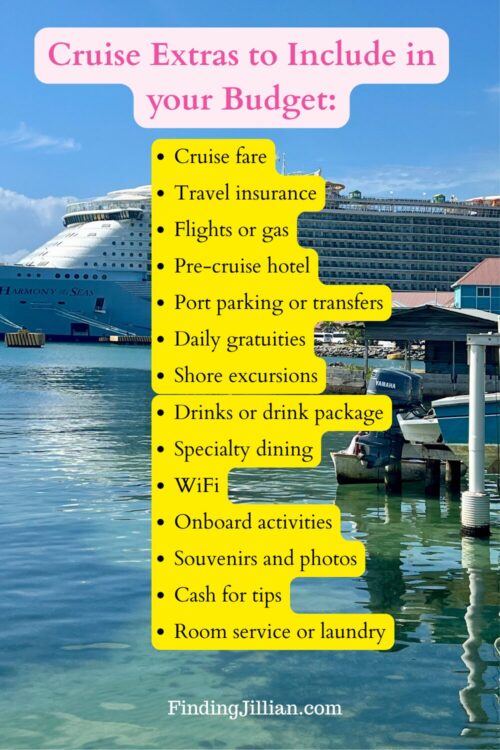
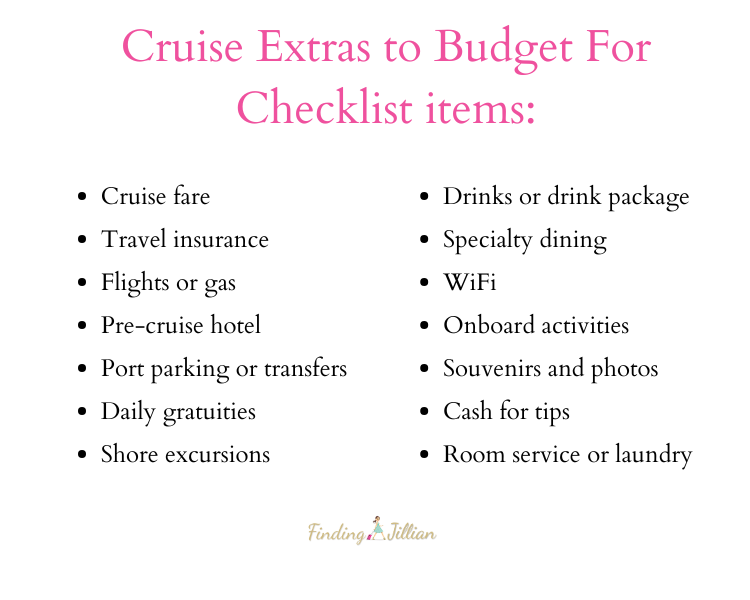
When planning a cruise, budget for more than just your cruise fare. Common extra cruise costs include transportation to the port, pre-cruise hotels, travel insurance, daily gratuities, shore excursions, drink packages, specialty dining, WiFi, onboard activities, souvenirs, photos, and cash for tips or small purchases in port.
Not every cruiser will spend money in every category. You may skip specialty dining, pass on the drink package, or stay unplugged without WiFi. But it’s smart to know these costs exist before you sail so you can decide what matters most to you.
1. Cruise Fare
Okay, technically, this is not an “extra” cost of cruising, but since it is usually the biggest expense, we should start here.
Your cruise fare can vary a lot depending on the cruise line, ship, itinerary, sail date, and stateroom category. An interior cabin will usually cost less than a balcony cabin, and a suite can quickly increase the price.
You’ll also want to think about how many people are traveling with you. Will everyone fit comfortably in one cabin? Will you need more than one room? Are you traveling with kids, teens, grandparents, or extended family?
In my experience, especially when traveling with teens or extended family, two connecting rooms can sometimes make more sense than one larger room. The price can be better, and you get something incredibly valuable on a cruise ship: two bathrooms.
And if you’ve ever tried to get everyone ready for dinner in one cruise cabin, you know exactly why that matters.
Budget tip:
Before booking, price out a few different cabin options. Sometimes the “obvious” choice is not actually the best value for your family.
2. Travel Insurance
Travel insurance is one of those cruise expenses that is not very exciting to buy, but it can be very important.
Cruises involve many moving parts: flights, hotels, luggage, weather, medical needs, and international ports. If something goes wrong, travel insurance can help protect the money you’ve already spent and may also help with unexpected medical costs or travel delays.

This is especially important if you are flying to your embarkation port, traveling internationally, cruising during hurricane season, or sailing with family members who may have health concerns.
You can usually purchase insurance through the cruise line, a travel advisor, or a third-party travel insurance provider. The right option depends on your trip, your needs, and what coverage matters most to you.
Most important to me has always been emergency medical coverage. Anyone, young or old, can have a medical emergency while onboard.
Budget tip:
Do not wait until the last minute to look at travel insurance. Some benefits may only be available if you purchase coverage soon after making your initial trip deposit.
3. Getting to the Ship
Your cruise is booked. How are you getting to the ship?
If you are driving to the cruise port, remember to budget for gas, tolls, parking, and possibly a hotel the night before. Cruise port parking can be convenient, but it can also add up quickly over a weeklong cruise.
If you are flying, your costs may include airfare, checked bags, airport meals, transportation to your hotel, a pre-cruise hotel stay, and transportation from the hotel to the cruise terminal.
And yes, I highly recommend flying in the day before your cruise. I know it adds another expense, but the peace of mind is worth it. Flight delays, cancellations, weather issues, and luggage problems are not things you want to be dealing with on embarkation morning.
Hotels in popular cruise cities can also be pricey. Seattle for Alaska cruises, Fort Lauderdale, Miami, Port Canaveral, and other busy embarkation ports can all come with higher hotel rates, especially during peak travel seasons. Book early for the best price or use points as I do with my favorite travel rewards credit card.
Budget tip:
Check nearby airports and surrounding towns. For example, if you are sailing out of Miami, you may find a better flight into Fort Lauderdale, which is about 30 miles away. Just be sure to factor in the cost and timing of transportation between the airport, hotel, and port. And book as early as possible.
Related Post Suggestion:
Understanding Cruise embarkation day
4. Daily Gratuities
Daily gratuities are one of the most important cruise costs to understand before you sail.
Most major cruise lines automatically add a daily gratuity charge to your onboard account. This amount helps compensate the hardworking crew members who take care of you throughout your cruise, including dining staff, stateroom attendants, and behind-the-scenes crew.
Hopefully, I am not alone in this opinion, but standard daily gratuities are something you should plan to pay.
Yes, there are situations where guests can request adjustments, but in general, I recommend budgeting for them as part of your cruise cost from the beginning.
Think about every person helping make your vacation feel easy: the room steward who makes your bed, refreshes your towels, fills your ice bucket, and somehow remembers your schedule; the dining team that serves dinner each night; the crew members clearing tables, answering questions, and keeping the ship running.
It is worth budgeting for; in fact, I just added it to my cruise fare balance.
Some cruisers also bring extra cash to tip crew members who go above and beyond, especially room stewards, favorite bartenders, or dining room servers.
5. Shore Excursions
Shore excursions are technically optional, but they can become a major part of your cruise budget.
You can absolutely walk around some ports on your own, explore near the ship, or enjoy a low-cost beach day. We have done plenty of DIY port days and loved them.
But if you are sailing to beautiful places that you may not visit often, you may want to budget for at least one or two special activities.
Excursions can include snorkeling, food tours, beach clubs, catamaran sails, city tours, ziplining, museum visits, transportation to nearby towns, and more. Prices vary widely depending on the port, activity, cruise line, and whether you book through the ship or independently.

You can book excursions directly through your cruise line, which often gives newer cruisers extra peace of mind. You can also look at third-party options through companies like Viator, Tripadvisor, Shore Excursions Group, or local tour operators.
If you book outside the cruise line, do your research. Read reviews carefully, check the cancellation policy, and make sure the tour operator understands cruise ship schedules. Many reputable third-party excursion companies offer a return-to-ship guarantee, but you still need to be thoughtful about timing.
Recommended Resources: (affiliate links)
Budget tip:
Do not feel like every port needs an expensive excursion. Pick the experiences that matter most, then balance them with DIY port days, beach days, or strolling around town.
Related Post Suggestions:
What Happens If You Miss the Cruise Ship?
When to book excursions through the cruise line and when NOT to.
6. Drink Packages
Drink packages can be one of the most talked-about cruise extras, and for good reason. They can be convenient, but they are not cheap.
Cruise drink packages usually come in a few different varieties. Some include alcohol, while others cover non-alcoholic drinks like soda, bottled water, specialty coffee, mocktails, fresh juices, or smoothies. Some cruise lines, like Disney, include soda, but many also offer a separate “soda” package.
Brian and I enjoy our morning latte, a beer or frozen drink by the pool, and a glass of wine with dinner. And yes, those drinks can add up.
Do we always drink enough to “break even” on a drink package? That depends on the sailing. But I do love the feeling of paying for it before we leave home, rather than mentally adding up every latte and piña colada on vacation. It was a very happy day when we became Diamond, then Diamond Plus with Royal, and started receiving drink vouchers.
That said, drink packages are not the right choice for everyone. If you only have one drink a day, prefer water, or spend most of your port days off the ship, you may save money by skipping the package.
Some cruise lines offer drink packages as part of promotional fares or bundled perks. Celebrity, Norwegian, MSC, and other lines may offer packages that are included or discounted depending on the booking offer, so always compare the total price, not just the word “included.”
Also, cruise lines require both adults in the same cabin to purchase the alcoholic drink package if one adult buys it. There used to be a few exceptions to this rule if you called in to explain, but those days seem to be long gone.

Related Post Suggestion:
Drink Package Alternatives
7. Specialty Dining
Can you go on a cruise and only eat at the included restaurants? Absolutely.
We did it for years.
For a long time, we were perfectly happy with the main dining room, buffet lunches, pizza, snacks, and all the other included food options.
Specialty dining has become a much bigger part of cruising in recent years. Newer ships often have steakhouse restaurants, sushi, Italian, seafood, hibachi, chef’s table experiences, tapas, barbecue, and more. These restaurants can make a cruise feel extra special, especially for a birthday, anniversary, or date night.
But they are still an extra cost.
If specialty dining fits your budget, go for it. We have had some really fun meals at specialty restaurants. But if it does not fit your budget, do not feel like you are missing out on the “real” cruise experience. You can eat very well on a cruise without spending extra on dining.

Budget tip:
If you know you want specialty dining, check your cruise planner before you sail. Some cruise lines offer pre-cruise discounts or multi-night dining packages that cost less than booking onboard. Some lines also offer a dining credit with the booking promo.
8. Internet and WiFi
You may be thinking, “Why would I pay for internet? I’m on vacation!”
Honestly, fair.
But there are plenty of reasons cruisers choose to buy WiFi. Brian and I have work responsibilities to keep up with while we travel. We also have young adult kids, elderly parents, and family at home, so we like knowing we can be reached if needed.
And, if I’m being completely honest, my mom sends me pictures of Bella, our very spoiled goldendoodle. So yes, I’m paying cruise ship internet prices for dog updates.
No regrets.
Internet service varies by cruise line and by ship. Some ships now have much better internet than they did years ago, especially with newer satellite technology, but it can still be expensive. Before purchasing, read recent reviews for your specific ship if internet access is important to you.
Cruise wifi can cost about $20 per day, per device. It’s pretty ridiculous, if you ask me. Being connected is completely integrated into our daily lives, and cruise lines all push their apps. I am hopeful that it will be included one day, but in the meantime, we pay a high price.
One decent, relatively new alternative is using e-sims like Gig-Sky. It’s much less expensive than shipping Wi-Fi. Cell phone providers are also jumping on and offering a per-day rate for cruisers, but check pricing, because some are higher than the onboard wifi. Check all of your options well in advance of your cruise.
If you do not need to be connected all the time, you can skip the ship WiFi and use free or low-cost WiFi in some cruise terminals, cafes, or port areas. Just be cautious with public WiFi and avoid accessing sensitive financial information.
Related Post Suggestion:
Working Remotely from a Cruise Ship
9. Onboard Activities and Entertainment Extras
Cruise ships are becoming more and more like floating resorts.
Depending on the ship, you may find go-karts, escape rooms, laser tag, arcades, virtual reality games, behind-the-scenes tours, fitness classes, cupcake decorating, wine tastings, bingo, spa services, thermal suites, and more.
Many activities are included in your cruise fare, but not all of them.
This is especially important if you are cruising with kids or teens. It is very easy for arcade charges, specialty treats, or extra activities to appear on your onboard account if you are not paying attention.
And it is not just the kids.
Spa services, salon appointments, fitness classes, casino spending, bingo cards, and adult-only experiences can all add to your final bill.
Budget tip:
Before you sail, check your cruise app or cruise planner to see which onboard activities cost extra. You can also set spending limits for kids or teens if your cruise line allows it.
10. Souvenirs and Photos
Cruise ship photos can be surprisingly tempting.
You’re dressed up for dinner. Everyone is smiling. The lighting is good. No one is complaining that Mom wants “just one nice picture.” Suddenly, that photo package starts looking pretty appealing.
Cruise lines often offer professional photos around the ship, including embarkation photos, formal night portraits, port photos, dining room pictures, and character or themed photos, depending on the ship.
You are not obligated to buy any of them, but if you know you love vacation photos, it is smart to budget for them in advance.
Souvenirs are another easy expense to overlook. Gift shops, port markets, logo sweatshirts, ornaments, magnets, hats, jewelry, and “just one little thing” purchases can add up quickly.
And yes, sometimes the “little thing” is a cruise ship model your child absolutely cannot live without.
Budget tip:
Decide ahead of time if you want a photo package, a few individual photos, or none at all. For souvenirs, consider giving kids a set amount of spending money so they can choose what matters most to them.
11. Cash for Your Cruise
Even though cruises are mostly cashless once you are onboard, I still recommend bringing some cash.
During port days, we usually use credit cards for larger purchases or planned activities. I do not like carrying a lot of cash around. But I do bring a small pouch with dollar bills and five-dollar bills for tips and small purchases in port.
We also use cash to tip porters who handle our luggage, give a few dollars to a great bartender or tour guide, buy small snacks or trinkets in port, or leave extra for crew members who took especially good care of us.
I also like to tuck away a little extra cash for our room steward. They work long hours and somehow manage to say yes to every little request, from opening the adjoining balcony to keeping our ice bucket filled.
Yes, daily gratuities matter. But when someone has made our cruise extra comfortable, I like knowing an additional cash tip goes directly to that person.
Most cruise ships do have ATMs, but I would rather bring a little cash from home than pay scary ATM fees at sea.
Related Post Suggestion:
How Much Cash Should You Take on Your Cruise?
12. Room Service, Laundry, and Other Small Fees
This is the category I like to call “the little things that add up.”
Depending on your cruise line, you may pay extra for certain room service orders, late-night delivery, laundry, pressing services, bottled water, specialty desserts, premium menu items, or convenience fees.
Not every ship charges for the same things, and policies can change, so it is always a good idea to check your cruise line’s current details before you sail.
Room service is a good example. Some cruise lines still include continental breakfast, while others charge delivery fees or have certain menu items that cost extra. Laundry can also be helpful on longer sailings, especially if you are trying to pack light, but it is usually not cheap.
Budget tip:
These small charges may not be a big deal individually, but they can add up if you are not aware of them. Build a little wiggle room into your cruise budget for miscellaneous onboard expenses.
Related Post: Can You Do Laundry on a Cruise Ship?
Worrier’s Guide: How to Avoid Surprise Cruise Costs
If you are the kind of person who worries about checking your onboard account halfway through the cruise, I see you.
Here are a few simple ways to feel more in control of your cruise spending:
First, check what is included before you sail. Every cruise line is a little different, so look at your booking details, drink package options, dining options, gratuity policy, and WiFi plans ahead of time.
Second, use your cruise app. Most cruise lines allow you to check your onboard account during the cruise. I recommend checking it every day or two so there are no surprises at the end.
Third, set a budget for extras. You do not need to plan every dollar perfectly, but having a general amount for excursions, drinks, souvenirs, and onboard extras can help.
Fourth, talk to your kids or teens before the cruise. Make sure they understand what they can and cannot charge to the room. Arcade games do not feel quite as “free” when the bill shows up later.
And finally, do not try to sneak alcohol onboard. I know people talk about it in cruise groups, but it is not worth it. Cruise lines can confiscate it, and in more serious situations, you could risk being denied boarding or banned from sailing with that cruise line. There are better ways to save money on drinks, including bringing allowed beverages, choosing à la carte drinks, or considering a non-alcoholic package.
Related Post Suggestion:
10 Easy Steps to Planning a Cruise –
So, how much extra money should you budget for a cruise?
The honest answer is: it depends.
A couple taking a short cruise and skipping drink packages, specialty dining, and excursions may spend very little beyond the cruise fare, gratuities, and transportation.
A family flying to the port, staying in a hotel, booking excursions, buying WiFi, and adding a few onboard splurges may spend hundreds or even thousands more.
That does not mean cruising is a bad value. It just means the total cost of a cruise vacation is more than the advertised fare.
The key is deciding what matters most to you.
Maybe you would rather spend money on a balcony cabin and skip specialty dining. You may be happy in an interior room but want amazing excursions. Maybe the drink package makes your vacation feel more relaxing. Maybe you would rather pay as you go.
There is no perfect cruise budget. There is only one that works for your trip.
Related Post: How much cash should I bring on my cruise?
Free Cruise Budget Planner
Ready to plan your cruise without guessing what everything might cost?
Grab my free cruise budget planner to help you organize your cruise fare, transportation, hotel, gratuities, excursions, drink packages, WiFi, dining, souvenirs, and other extras before you sail.
FAQ: Extra Costs of Cruising
What costs extra on a cruise?
Common extra costs on a cruise include gratuities, alcoholic drinks, specialty coffee, soda, WiFi, specialty dining, shore excursions, spa services, arcade games, photos, souvenirs, laundry, some room service items, and transportation to and from the cruise port.
Are gratuities included in the cruise fare?
Sometimes, but not always. Many cruise lines automatically add daily gratuities to your onboard account. Some cruise lines or promotional fares include gratuities, so check your specific booking details before you sail.
Do I need a drink package on a cruise?
Not necessarily. A drink package may be worth it if you drink several alcoholic beverages, specialty coffees, bottled waters, or sodas each day. If you only drink occasionally, you may save money by paying per drink.
Can I cruise without spending extra money onboard?
Yes, it is possible to spend very little onboard if you stick with included dining, included drinks, free entertainment, and low-cost port days. However, you should still budget for gratuities, transportation, and any pre- or post-cruise travel expenses.
Are shore excursions worth the cost?
Shore excursions can be worth it if they help you experience something special, make logistics easier, or give you peace of mind in an unfamiliar port. But you do not need an expensive excursion in every port. A mix of planned excursions and DIY port days can be a great way to manage your budget.
How do I avoid surprise charges on a cruise?
Review what is included before you sail, check your onboard account during the cruise, understand your cruise line’s gratuity and package policies, and set spending limits for kids or teens if needed.
Final Thoughts on the Extra Costs of Cruising
Cruising can still be a wonderful vacation value, but it helps to go in with your eyes open.
The cruise fare may get you onboard, but the extras of cruising can shape your total vacation cost. Some extras are worth every penny. Others may not matter to you at all.
The goal is not to scare you or make cruising feel complicated. It is simply to help you plan ahead so you can spend your vacation enjoying the ocean view instead of mentally calculating every charge.
Budget for what matters, skip what does not, and leave yourself a little wiggle room for the fun surprises.
Because yes, everything may feel expensive in 2026.
But a well-planned cruise? Still worth it.
Let’s Connect
Finding Jillian Ultimate Cruise & Travel Planner (digital download/printable)
Follow me on Facebook at Finding Jillian Cruise Travel
Visit my curated lists in my Amazon Storefront
Follow me on Pinterest at Finding Jillian
Follow me on Instagram and YouTube at Finding Jillian
Subscribe to my newsletter.
Don’t forget to Pin it!